A Home Energy Audit (also known as a home energy assessment) is a series of specific tests and inspections performed by a certified professional to determine where your house could be more energy efficient.
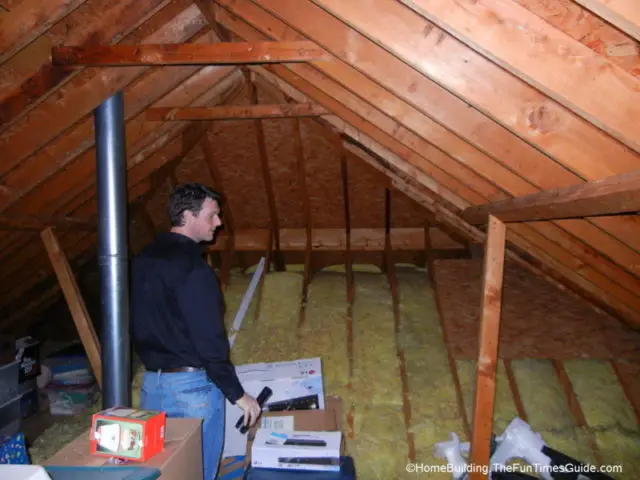
We recently had a free Home Energy Review — which is not the same thing as a Home Energy Audit. It was performed on our home by a representative of Home Energy Solutions. With a Home Energy Review, a sales rep comes to your house and performs a complimentary 15-point inspection with an intent to sell you something.
In our case, they were attempting to sell their primary product (a radiant barrier called eShield 11,000 Attic Energy Barrier). Therefore, it wasn’t a “scientific study” that would pinpoint our home energy loss areas with a detailed report.
That’s okay, though — because there was never the assumption on our part that this was anything other than a sales call with the benefit of giving us a heads up on a few helpful tips on things we could do ourselves to improve our home’s energy efficiency.
So… just make sure that you know the difference between the two if you’re offered a free home energy assessment!
A true Home Energy Audit will NOT be free. It will cost you several hundred dollars — because it is intended to benefit the homeowner without the sales pitch. And you will be given a multi-page report with tons of technical data about your house.
We had a different salesman from another company come to our door later in the week under the Home Energy Review cloak and he was selling eShield, also. (There’s an hour out of my life that I’ll never get back.) When comparing the two, the first guy was more thorough and did a better job. The second guy didn’t even bother to go more than halfway up the pull-down stairs to the attic and made his assessment of my attic from there. What a joke!
Here’s what you need to know about a Home Energy Audit vs. a Home Energy Review — and how to do it yourself…
What Does A Home Energy Audit Consist Of?
I called a professional Home Energy Audit service and asked for the cost of their service.
You can plan on around $400 for a home up to 4,000 sq. ft and $100 more for each additional 1,ooo sq. ft. — each contractor’s fee may vary.
There are at least 3 tests that every certified home energy auditor should perform:
- Blower Door Test with a calibrated door – to measure the extent of leaks in the building envelope.
- Thermographic Inspection with an infrared thermal imaging camera – to reveal areas of air infiltration and missing insulation throughout all areas of the your home. Be sure that the company you hire uses high resolution infrared cameras — 320×240 is ideal.
- HVAC Ductwork Leakage Test – to inspect ductwork connections, insulation, and the HVAC units themselves.
The auditor will inspect the exterior and interior of your home looking for potential problem areas.
For example, one item on the list is your water heater. They will check the age of the unit and suggest that you put an insulated blanket around and on top of it.
TIP: Before your appointment, be sure to gather several months of your utility bills — so you can review them with the auditor.
What Does A Home Energy Review Consist Of?
The tips that the salesman from Home Energy Solutions provided during my Home Energy Review made a lot of sense.
I was proud of the fact that I had already done many of the things that were on his checklist of homeowner DIY tasks to improve energy efficiency in the home.
The laundry list of items he suggested for all homeowners were as follows:
- Wrap the water heater (including the top) with a thermal/radiant blanket.
- Turn down the water heater thermostat so that the temperature is no more than 120º F.
- Insulate the inside of the garage door.
- Add weatherstripping around the exterior of the garage door to keep drafts out.
- Install a programmable thermostat for your HVAC system and learn how to operate it effectively. This includes programming it not to have temperature swings of more than 10º from hour-to-hour.
- If you have pull-down stairs to your attic, add a piece of closed cell foam weatherstripping to the attic door — around the outer edge on the inside. This will give you a good seal.
- Install an insulated attic door cover.
- Add a new seal on the bottom of the garage door.
- Add insulation to the ceiling of unfinished areas in the garage and basement to meet or exceed R-14.
- Tighten up the lugs on the electric panel to insure more consistent power delivery. Inconsistent power will add wear and tear to appliances and light bulbs. (NOTE: This requires hiring an electrician!)
- Switch out incandescent bulbs for CFL bulbs. (We’ve had CFL’s in many of our fixtures and they didn’t seem to last nearly as long as promised. We made the decision to buy back into incandescent bulbs in most fixtures of the house. LED light bulbs are another good alternative.)
- Set your refrigerator temperature to 40ºF and your freezer to no less than 0ºF.
- Apply low-E film to the interior of your single-pane windows.
- Replace the threshold gaskets on all of your entrances, if needed.
- Check all exterior door gaskets and replace, if needed, or every 5 to 7 years.
- Install a chimney balloon when the fireplace is not in use. It will seal the chimney and keep the conditioned air inside your house.
- Use an infrared thermometer with laser sight to measure where is air leaking in or out by pinpointing differences in temperatures, water temps, and much more. It’s very handy and inexpensive for the amount of valuable info it will give you.
How To Do Your Own Energy Audit
The goal is to go through your house and find areas where air is leaking, insulation is not working or more is needed, windows needing caulking, etc.
An energy audit can save you 5% to 30% on the cost of your heating bills each year. That’s a savings of up to $1,000 per winter!
An energy audit entails a series of tests that tell you the efficiency of your heating and cooling system and the overall efficiency of your home. On the basis of test results, the auditor will recommend low-cost improvements to save energy and larger upgrades that will pay you back within 5 to 7 years. Audits take 2 to 3 hours and cost $250 to $400, but if you set one up through your utility company, you may be eligible for a rebate. — The Family Handyman
While many people do hire an expert to come in and do the Home Energy Audit, this can cost big bucks. If you’re strapped for cash, then doing it yourself is one way to keep your cash in the bank.

Here’s how:
#1 – Do a walk-through of your home and keep a list of any problems you discover.
This way, when you go back through again a year or 6 months later later, you can note if these problems have been solved by the fixes you implemented, or if you need to try something else.
#2 – Look for air leaks.
Plugging up air leaks can save you as much as 30% a year on your energy bills. Look for areas that commonly have air leaks — such as gaps under your front and back doors, or gaps around sliding glass deck doors, attic hatches, and the space around a window-mounted air conditioner, to name a few.


If you have an older home, then you can assume you probably don’t have enough insulation. While the builder would have put whatever was recommended at the time, given the high energy prices now, it is probably not enough. If the insulation levels are lower in your walls and ceilings than they should be, you could be losing a lot of heat in the winter and cool air in the summer — thus increasing your energy bills.
#4 – Check your heating and cooling equipment.
If any of your equipment is older than 15 years old, you should replace it with newer more energy-efficient units. Anything 15 years or older is not going to be energy-efficient and, in fact, could be costing you serious money. Also, make sure you change air filters as needed, and close off rooms that you are not using. Heating and/or cooling rooms not in use can be a big energy waster and increase the energy bill for your home.
#5 – Reduce the energy used to light your home.
The energy used for house lighting accounts for only about 10% of your energy bill. However, there are ways to cut down on your energy usage when lighting your home. A few examples are:
- using the new energy-efficient bulbs
- using florescent lighting when possible
- turning off lights in rooms you are not using or don’t need
The Bottom Line
Those are just a few things to look for when doing your own Home Energy Audit. They are the most common ones.
If you take care of any problems that you have in relation to these areas, you will save a lot of money on your energy bill!
TIP: Utility companies are also notorious for giving away free energy-saving gifts and even doing free audits in some cities. Be sure to check locally — just remember the important differences between a Home Energy Audit vs. a Home Energy Review!
More Advice Before Doing A Home Energy Audit
- U.S. Department of Energy Home Energy Audit Info
- Home Energy Audit Benefits
- Energy Star Home Energy Audits
- How To Prepare For A Home Energy Audit
- A Checklist For Doing An Energy Audit Yourself
- DIY Energy Audit Tips
- Video: One Family’s DIY Energy Audit (Part 2 here)
- Web-Based Energy Audit Tool
- DIY Energy Audit Tools
- A Home Energy Audit vs. A Home Energy Review