 There are quite a few alternative eco-friendly flooring options on the homebuilding market these days.
If you’re looking for flooring that is beautiful and rich-looking, while at the same time eco-friendly, then coconut and sugar palm flooring could be your answer!
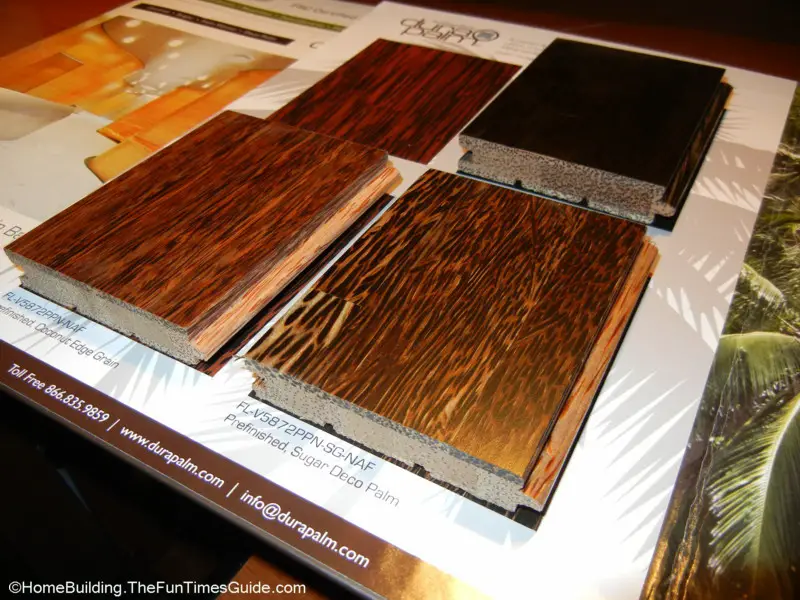
I recently acquired some coconut and sugar palm flooring samples from alternacorp, and I was floored (pun intended) by how they looked. This is some really beautiful and exotic-looking stuff. There are all sorts of positives to palm flooring which I will explain later in this post.
Alternacorp distributes Durapalm, which is manufactured by Smith & Fong. It was introduced back in 2000 and they are now utilizing 2 species of palm: coconut palm and sugar palm.
Durapalm Flooring
The Durapalm brand of palm flooring is made from reclaimed plantation-grown coconut or sugar palms that are grown in Asia and that are past their fruit-bearing years.
That means that the trees aren’t burned or dumped in totality in a landfill after they no longer produce nuts.
Many of these plantation trees are over 100 years old and can reach over 100 feet tall, or more.
The felled timber has no secondary market but Smith & Fong, as well as a few other choice flooring and paneling manufacturers, are working with plantation farmers to make the smartest use of this unused timber.
If the trees are reclaimed for use in flooring, veneer, and paneling it will help to keep more of the rainforests intact by becoming a source of income for the farmers. Palms have been an overlooked resource because the wood near the bark is hard but the inner wood is softer.
Smith & Fong cuts the timber in a special process, slices, and then kiln dries it before the lamination process begins.
As I mentioned previously, Durapalm is made with no added urea formaldehyde.
You can earn LEED credits in your home building project by purchasing this brand of palm flooring, too. Durapalm palm flooring qualifies for IEQc4:3 for low emitting materials for flooring systems.
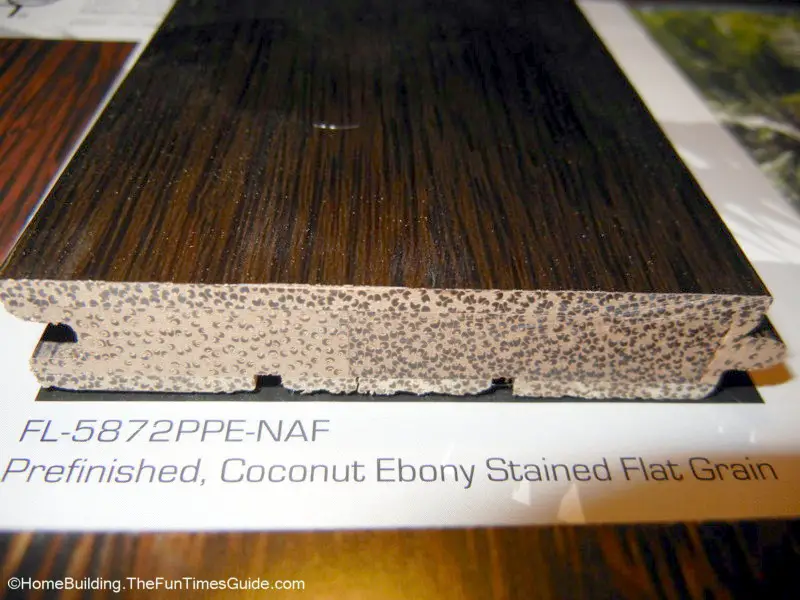
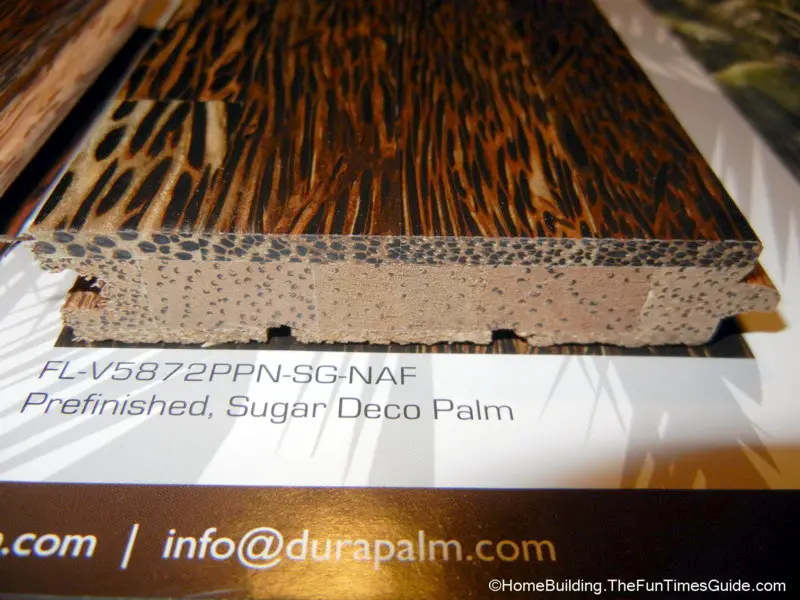
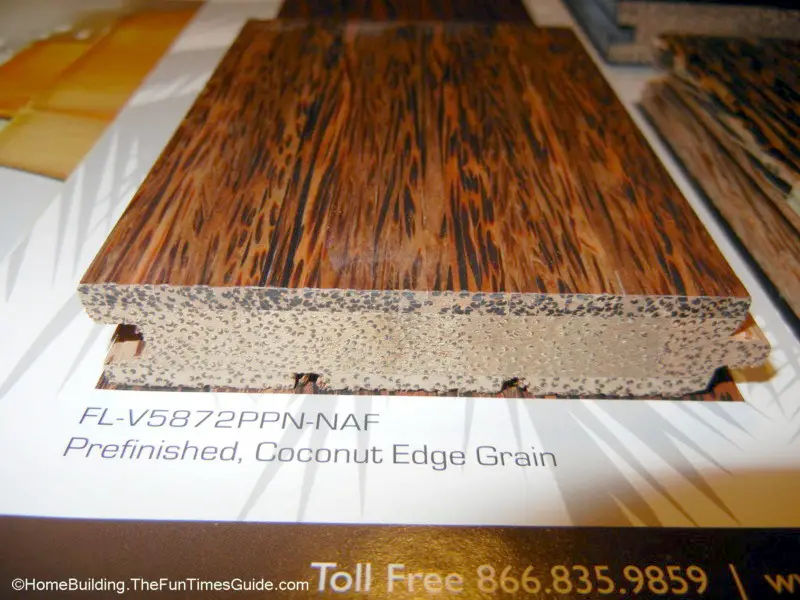
The tongue-and-groove planks are made by laminating multiple layers of palm wood together using non-toxic adhesives. The final product is stable and can be cut just similar to other ordinary flooring products.
You can order flat grain or edge grain planks, just like bamboo, and it is available prefinished or unfinished.
Here are a few examples of what is available. Notice the laminated layers and the way the grain is situated:
DIY Tips: Before Cutting & Sanding Coconut Palm Wood
(From coconut-wood.com)
Palm is a monocotyledon. This means that the wood trunk only grows to a certain diameter (approximately 12 inches) and the tree only grows upward.
There are no branches, therefore, there are no knots in palm wood.
Typically, sawmills will use the bottom two-thirds of the tree and the remainder is burned for fuel — with the exception of the edible palm heart near the top.
There are 2 basic grades of palm wood:
- Inner core (softer)
- Outer hardwood
Within these grades, there are variations in color, grain, and shade.
Palm wood has a high silica content and is abrasive. It is recommended that you use a tungsten-tipped saw blade when cutting it. Plane with the grain with the fibers rising away from you, while sanding should be done cross-grain.
More About Eco Friendly Flooring
- Sustainable Coconut Palm Hardwood Flooring
- Bamboo Flooring: The Environmental And Health Impacts
- Formaldehyde-Free Bamboo Flooring
- Cork Flooring: A Growing Trend
- Pros & Con Of Natural Cork Flooring
- Smith & Fong Bamboo Flooring

I started as a home-stalker… visiting brand new homes under construction in the neighborhoods near my house.
That inspired me to write about home building and home renovation projects — chronicling homes during different phases of construction from a consumer’s point-of-view. Basically, the tips you’ll find in my articles are a collection of checklists for what I think should (and should not) go into building or remodeling a quality home.