I made a return visit to the English cottage that I’ve featured in recent months and was greeted by homeowner and custom homebuilder Jerry Bonner, of Bonner Custom Homes.  With Jerry’s permission, I was allowed to tour his home and snap a few photos of the finished product. It was truly an honor!
One feature inside his house that caught my eye (among many) were the stained cork flooring tiles he had installed in the basement. It’s no ordinary basement but I’ll save that for upcoming posts.
Natural cork flooring tiles are fast becoming the hottest trend in today’s homebuilding market for good reason.
Here’s why…

If you click on the photo above, you’ll see a closeup of the cork oak (Quercus suber) — which is a renewable resource that is harvested for wine corks and, of course, to make cork floor tiles amongst other uses.
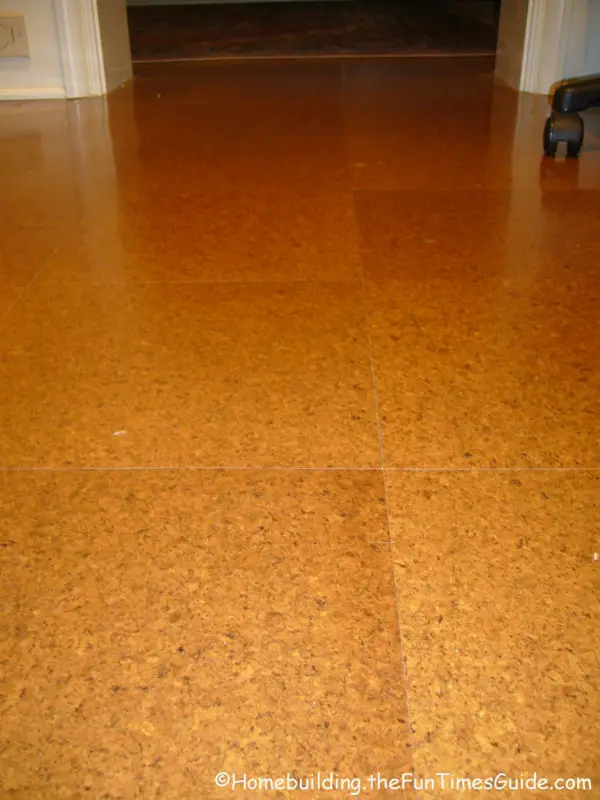
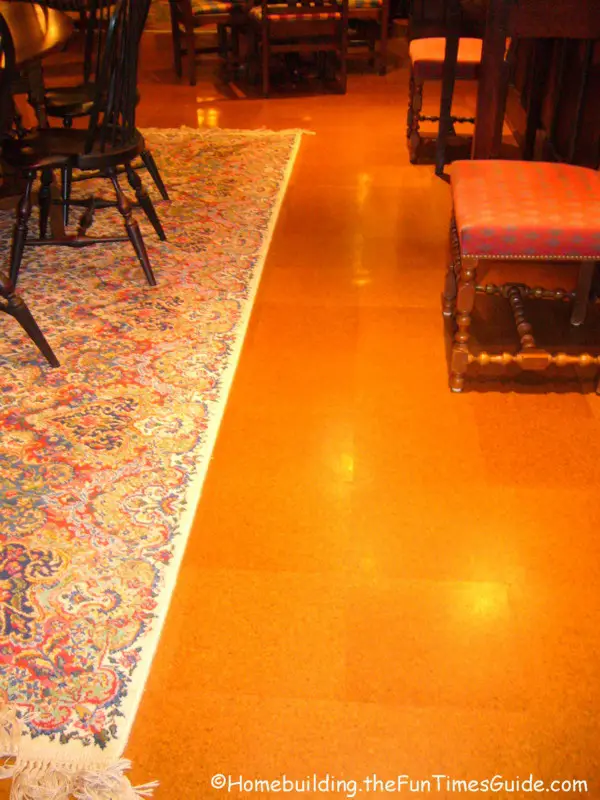
Here are some of the reasons you should consider cork floor tiles:
- Versatility: Cork can be stained in a variety of color options.
- Cork is a renewable resource (green homebuilding product) because you don’t fell the cork oak tree, you harvest the bark from it.
- Cork floor tiles are quick and easy to install. The area of the basement living area that the cork flooring is installed on is approximately 1200 sq. ft. (by my guesstimation) and was finished by 4 installers in a single day.
- Cork, as it turns out, is a very cost effective flooring option according to Mr. Bonner.
- Cork makes for a more acoustically sound room – it deadens sound.
- Cork is soft underfoot.
- Cork is antimicrobial, resistant to mold and mildew.
- Cork is water-resistant and will last forever when installed properly.