Everyone knows how devastating a lightning strike can be.

Protecting your home from a powerful lightning strike could save your life, the lives of your family members, your home, its contents and electrical components that keep it up and running.
How do you prevent a lightning strike on your home? The answer is…”you can’t prevent a lightning strike.” But you can certainly nullify or minimize the damaging effects of a lightning strike by having a lightning protection system professionally installed in your home.
Why Am I Talking About Lightning Protection?
I’ve made another visit to the Victorian Queen Anne that I’m covering, and my timing couldn’t have been much better.
They were installing the lightning protection system and the owner/master installer/designer, Christian Wolf of Wolf Lightning Protection Corp., made himself available to answer a number of my questions.
I learned quite a bit about home lightning protection — and you probably will too.
Home Lightning Protection Systems
First, I’d like to give you some facts about the system being installed here in this Victorian home.
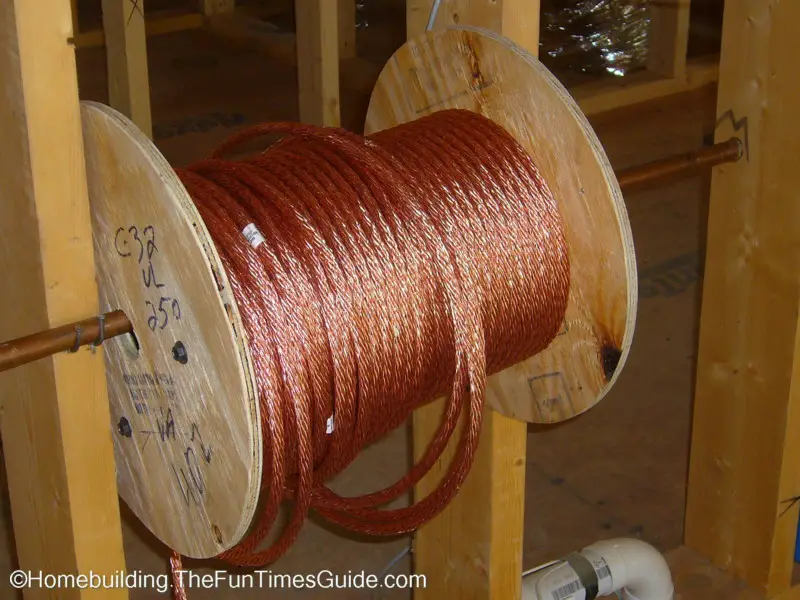
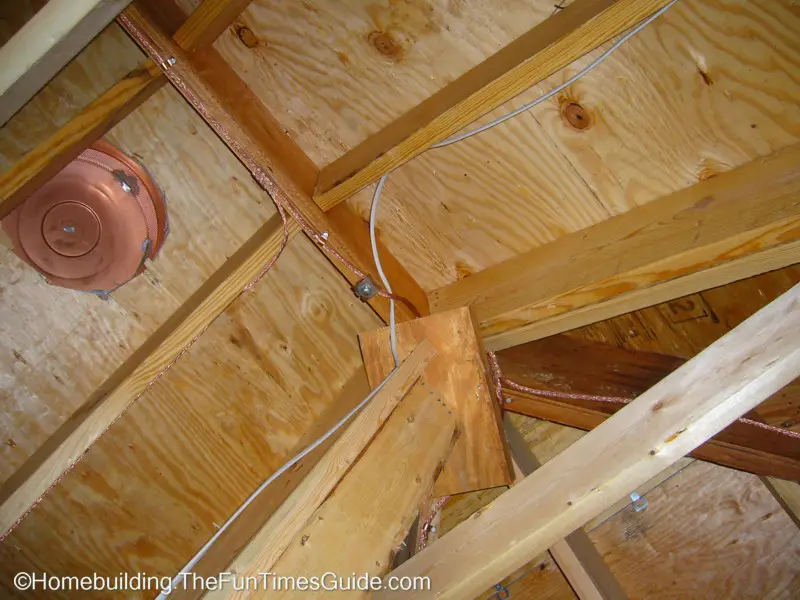
The core of the lightning protection system itself is the copper cable.
Wolf Lightning Protection buys copper cable by the spool. Each spool consists of 250 feet of copper cable that currently wholesales at approximately $400+ per spool — and up.
The copper cable is made up of 32 wound strands of 14 AWG wire.
The Victorian home will use 8 spools of cable, or around 2000 linear feet. That’s a lot of copper.
Christian tells me that he buys around 6,000 ft. of copper cable PER WEEK — so his wholesaler is kept very busy supplying Wolf Lightning with their needs.
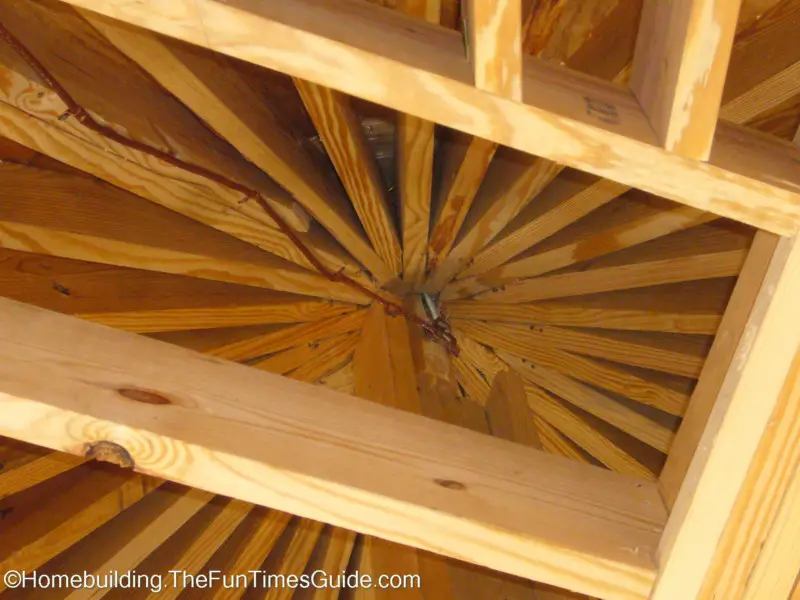
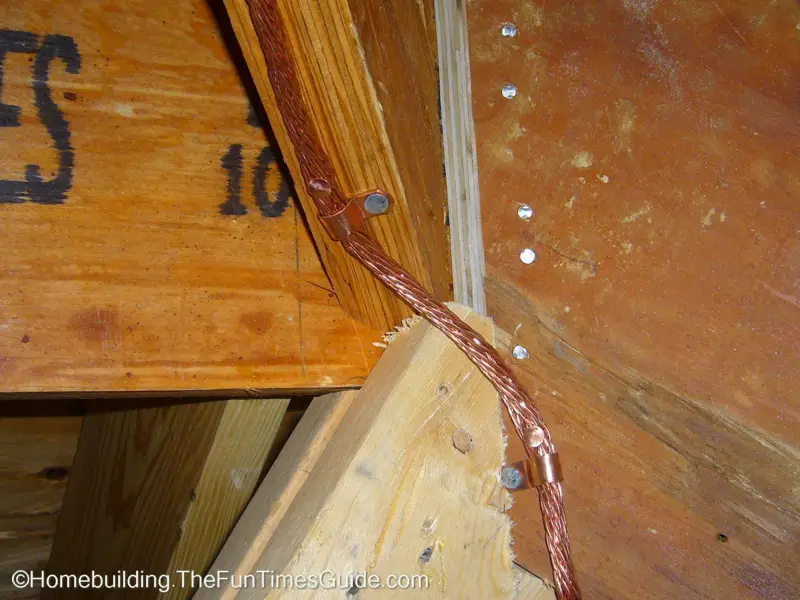
In addition to the lightning rods, each and every exposed metal vent will have a copper cable attached to it in the interior of the roof (see photos), and there are a couple dozen of them for this house.
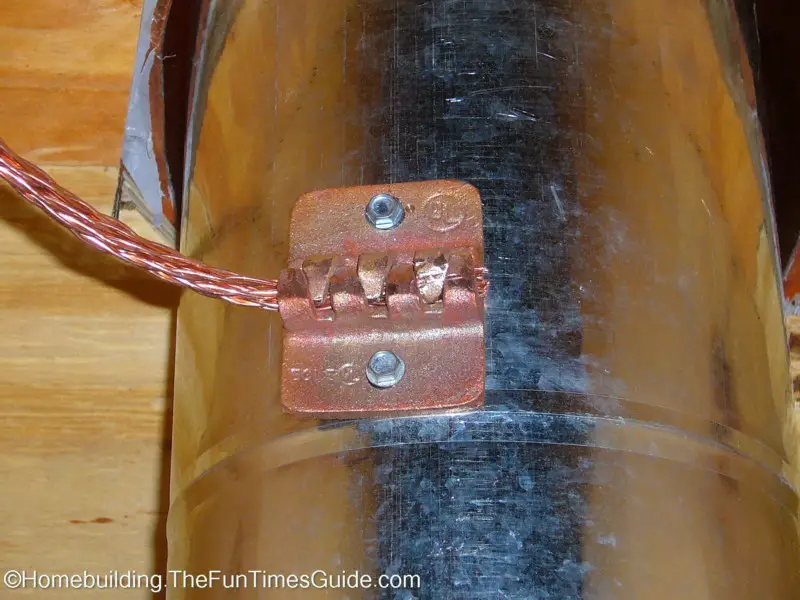
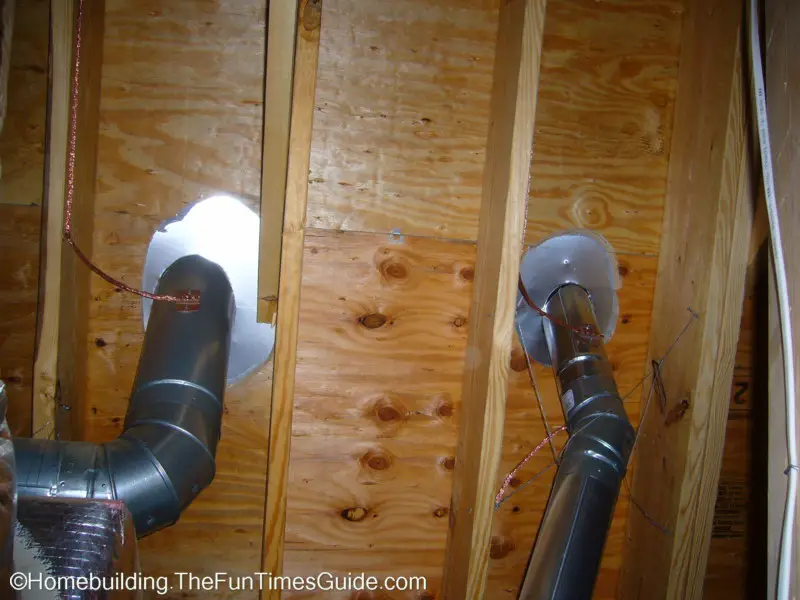
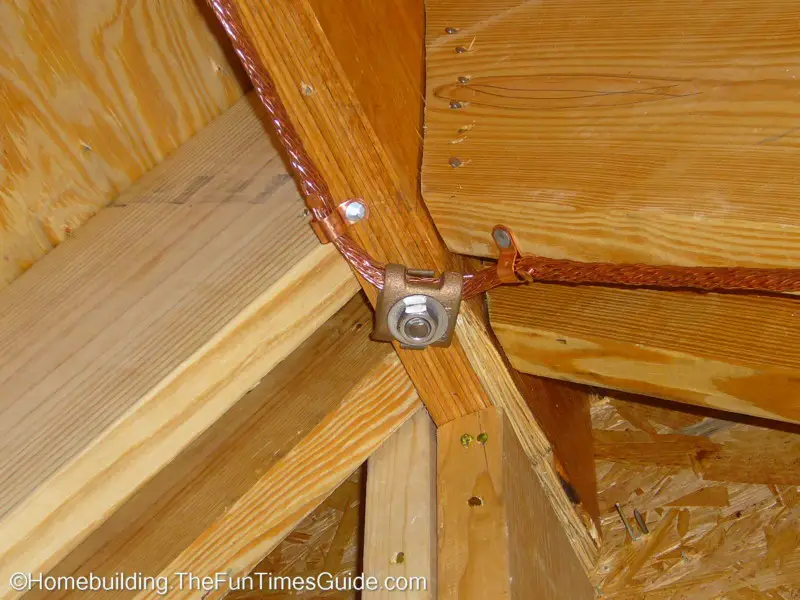
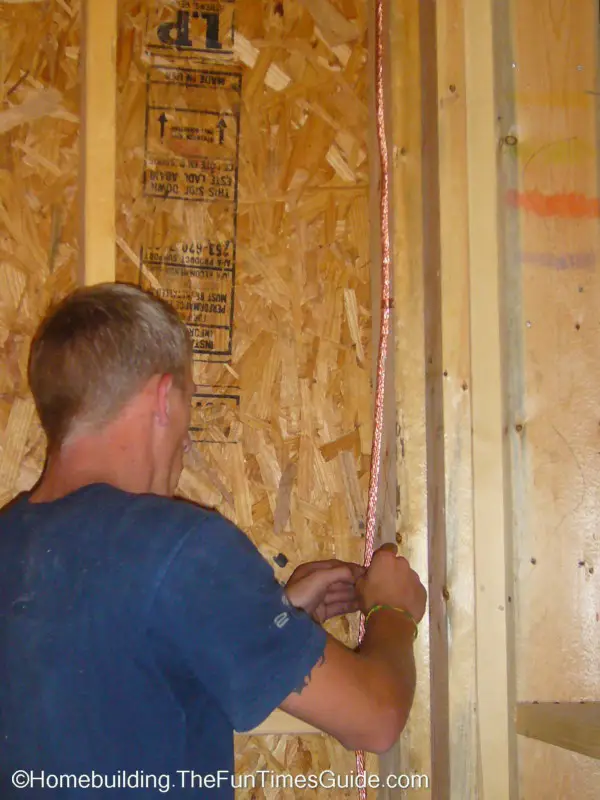
The clamp is nailed to the rafters with a copper guide, and the cable itself is also secured along the interior of the rafters (and everywhere else) with copper nails to keep it flush against the wood.
Are you beginning to sense a theme here? Copper, copper, and yet more copper creates a lightning “path” leading straight to the ground — should it decide to strike the home.
Christian says that you could use aluminum for the system to save money, but it’s not as good of a conductor as copper (…and I don’t think you’d want to play with 30 million volts).
The Victorian home will require 10 “lead outs” to the grounded loop.
I had to ask, “Why no more than 18?” The answer is because the ground that the cable is buried in tends to stay damp within the upper 18 inches of soil. The damp soil helps to keep the copper cable “wet”, thus, becoming a better conductor for the massive amount of electricity from the lightning bolt to follow.
How A Lightning Protection System Helps
So, do homeowners really benefit from having a lightning protection system installed?
For starters, consider these facts:
- From 2002 to 2005, only 16% of reported lightning fires occurred in homes — but these accounted for nearly all the associated civilian deaths, 90% of the associated injuries, and 58% of the direct property damage.
- From 2002 to 2005, U.S. fire departments responded to an estimated annual average of 31,400 fires started by lightning. These fires caused annual averages of 12 civilian deaths, 57 civilian injuries, and $213 million in direct property damage.
 What follows is a Q & A on lightning protection that I grabbed from the Wolf website to let you decide for yourself whether or not it’s worth it to have a lightning protection system installed, the benefits, how it’s installed, and more.
I asked Christian if a professionally installed lightning protection is expensive?
He said that depends on your perspective. How does an average of 1.5 – 2% of the cost of your home sound? Not so bad now, does it?
So you might be asking yourself, “How much did the lightning protection system cost for this huge Victorian Queen Anne home?”
The answer is around $12,000.
Now for the grab…
Q: Do lightning protection systems work?
A: Yes! A correctly designed and installed lightning protection system is proven to completely protect structures from lightning damages.Q: Do lightning rods attract lightning?
A: Definitely not! Lightning rods do not attract or prevent lightning strikes. A lightning protection system simply intercepts a lightning strike and provides a path into the ground to harmlessly discharge the dangerous electricity.Q: Our antenna is grounded, doesn’t that protect us?
A: No. An antenna is not designed to handle a lightning strike and, instead, allows dangerous current to enter the home.Q: Do nearby trees protect structures from lightning?
A: No. Many times after trees are struck, the lightning side flashes to the house. Valuable trees can be protected and are often made part of the lightning protection system.Q: Our home is grounded, doesn’t that protect us?
A: No. A house may be grounded to assure electrical safety, however, grounding is not intended to prevent lightning damages.Q: Can’t we install our own lightning protection system?
A: No. An improperly installed system may be dangerous. Lightning protection is a very specialized industry requiring trained technicians. A proper system takes into account your home’s design, construction, electrical components, soil condition, location and more.Q: Won’t it ruin the aesthetics of our home?
A: No. The system can be concealed within the walls during construction stage. For existing homes, conductors can be semi-concealed. Modern lightning protection systems are inconspicuous and virtually undetectable.Q: Can surge arresters, suppressors and “whole-house protectors” protect my home?
A: No. Surge suppressors are important components of a complete system, but can do nothing to protect a structure against direct lightning strikes. Arresters must be installed in conjunction with a lightning protection system to provide whole house protection.Q: Do lightning protection systems require routine maintenance?
A: No. Lightning protection systems are constructed of durable materials that are likely to outlast most other fixtures on your home. No maintenance is required unless changes are made to your structure or roof.Q: Is lightning protection expensive?
A: No. Compared to the majority of home improvements, lightning protection is one of the least expensive. It offers the best type of insurance–peace of mind and proven protection for your family, home and valuables. It is a big return on a small investment.Q: Am I safe if my home is in a low lying area?
A: No. Lightning frequently strikes in low areas as well as in higher elevations.
As a matter of interest…
Christian and I discussed his portfolio a bit and I found out that he has traveled throughout the world installing lightning protection systems for some very interesting clients including (here goes the shameless name-dropping)
- MLB players Tom Glavine, John Smoltz, Andrew Jones
- PGA pro Davis Love III (golfers have a high respect for lightning)
- Some Bonner Custom Homes clients