 Have you ever found yourself scratching your head at all of the different types of furnace filters to choose from at the home improvement store?
If so, you have lots of company wondering and staring at the shelves along with you.
In an ideal world you’d like to see an apple-to-apples comparison when you shop for HVAC filters, but in my experience it is somewhat similar to buying mattresses. You’re not certain if you’re getting the biggest bang for your buck unless you look closely at the nuts and the bolts of the product under consideration. Model numbers have no meaning.
I’m going to break down all of the different ratings and media types to help you choose the best air filter for your home HVAC system.
Types Of Home Air Filters
First and foremost, you need to understand the 4 different types of HVAC air filters that are commonly available:
- Woven Fiberglass
- Washable/Reusable Aluminum Mesh
- Electrostatically Charged
- Pleated
You may have noticed that I put them in order of filtering efficiency… worst to first.
Long ago, I would walk into my local home improvement center and buy a handful of 1-inch woven fiberglass filters and replace them every 30 days.
Woven fiberglass is outdated and nobody in their right mind should ever buy them again because they do very little to filter all of the stuff to keep our systems, HVAC and human, breathing cleaner air.
The same should be said regarding washable aluminum mesh filters. Both types of filters are a waste of money and do little to cleanse the air circulating in your HVAC system.
What Are MERV Ratings And MPR Ratings?
MERV (Minimum Efficiency Reporting Value) is the industry standard to look for when you are shopping for air filters.
It is officially known as ASHRAE Standard 52.1-1992. There is an updated standard, as well, known as ASHRAE Standard 52.2. Standard 52.2 categorizes the filters in the upper range of the scale.
MERV is a standard that was established by the American Society of Heating, Refrigerating and Air-Conditioning Engineers (ASHRAE) and the Institute of Environmental Sciences and Technology (IEST).
However, this standard is voluntary, as evidenced by 3M Filtrete filters which uses their own rating system called MPR (Microparticle Performance Rating). 3M filters are quality filters, they simply chose to go a different route.
This chart from the U.S. EPA provides a detailed explanation of MERV ratings.
How The Air Filters Rate
- Woven Fiberglass, Electrostatic, and Washable filters typically rate a MERV 1 – MERV 4. You could do much better for just a little more cash.
- Pleated filters have more media square footage to capture more particles and microparticles. They typically fall in the range of MERV 5 – MERV 8. This is the filter that most homeowners will purchase.
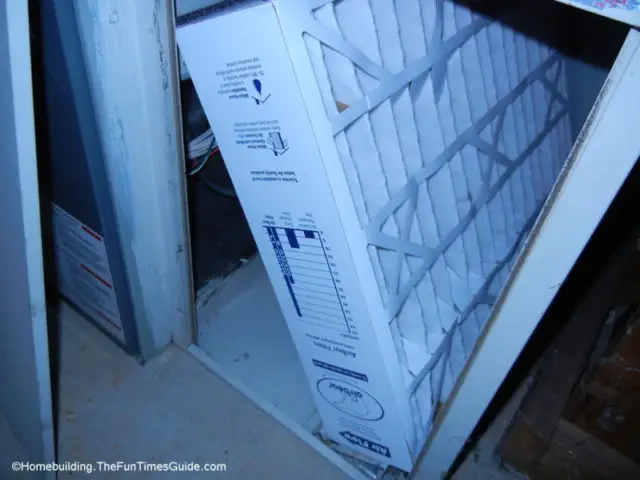
- Pleated Box filters have even more media so they usually rate between MERV 9 – MERV 12. My HVAC system has a Trion Air Bear cartridge holder at the end of the return run. You can see it in the lead photo (above). I buy three MERV 11 filters at a time and they will usually last me about a 1½ years in total.
- HEPA (High Efficiency Particulate Air Filter) and ULPA (Ultra Low Penetration Air Filter) filters will rate between MERV 16 – MERV 20. This is not what you would buy for your typical residential HVAC system. HEPA systems are specialized air conditioning units.
All you really need to remember is the higher the MERV rating, the better it filters the air in your house.
Sources: iaqsource, Air Purifier Guide, MERV Rating chart, Wikipedia, EPA: Residential Air Cleaners, Interpreting Filter Performance