 Septic tank maintenance is not a pretty subject to discuss… but it’s necessary knowledge if you have one for your home.
All household waste (except what you put in your trash can) is disposed of through the septic system — unless you happen to be on a sewer system.
So knowing how to maintain your septic system is vital to your household health system.
What do you know about how your septic tank system works? In my experience, I’ve never done much to maintain my system except to follow a couple of rules of thumb based upon facts I’ve learned about proper septic system maintenance.
First, I’ll tell you my 3 rules of thumb, along with a few other things you may need to know.
Septic System Maintenance – Rules Of Thumb
Let me start by saying that I have lived in the same house for the past 22 years and have only had the septic system pumped out one time. No problems here.
I’m not lazy. I simply know how to properly maintain my septic system.
As I mentioned, there are 3 rules of thumb that I follow religiously to keep my septic system in good order:
- First and foremost, bleach (and other hazardous materials) is a big no-no. Avoid pouring any type of product that contains bleach into your system via the laundry, toilet, shower or kitchen sink. Bleach will destroy the eco-system that is thriving in your septic tank. Think about it. Is bleach a common ingredient in the Everglades in Florida? Of course not. Mother Nature is a good guardian and teacher for all sorts of things in life — including how to maintain your septic system.
- Second, read the labels carefully for anything that will eventually find its way to your septic system (e.g., paper products, cleaning products). Most manufacturers are vigilant about stating if their product is “safe for septic.” This informs the consumer and also broadens the market for their product.
- Last, but not least, never disturb your leach field. You never want to interrupt the leach lines or put a swimming pool on top of it, as an example.
How Septic Systems Work
The septic system is comprised of a septic tank and a soil absorption area.
There are 5 main components of a residential septic system:
- A pipe leading from the home to the septic system
- A septic tank
- A drain field
- The soil surrounding your septic system
- Microbes
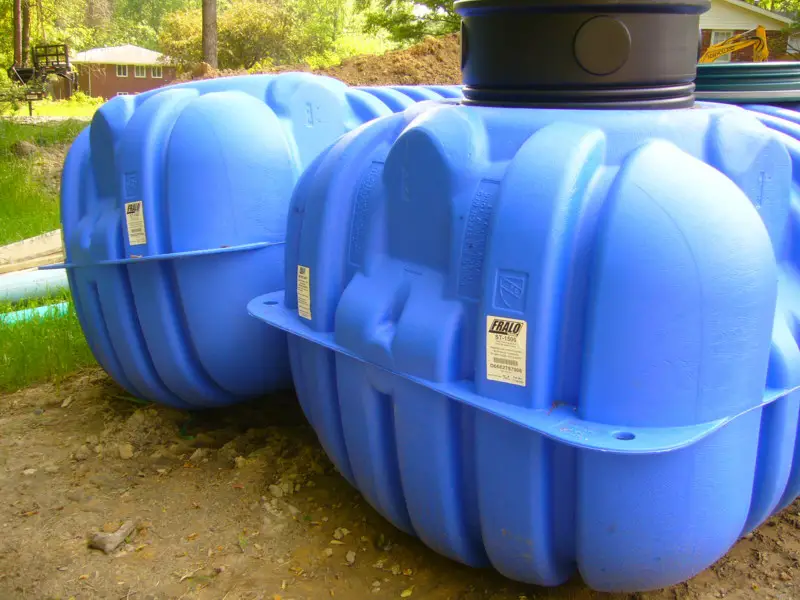
The septic tank itself is a watertight box made of precast concrete, concrete blocks, or a reinforced fiberglass capsule. You can see one of the capsules in the photo above.
Here’s how a septic tank works:
- Organic solid material floats to the surface to form a layer of scum. Bacteria in the tank biologically converts the scum to liquid. Microbes are your best friend in this situation, my friend.
- Inorganic or inert solid materials — as well as the by-products of the septic system’s bacterial digestion — sinks to the bottom and forms a layer called sludge.
- Mostly clear water exists between the scum and sludge layers. The clear water is the only component that should ever overflow into the soil absorption area. You will know if your tank is past due to be pumped when you have a hazardous waste situation in your yard. You’ll know it when you see it… and smell it. DON’T LET THAT HAPPEN!
Sludge will not biodegrade. It must be pumped out periodically or it may overflow into the soil absorption area. Not good!
There are many kinds of leach systems, and 3 main ways to carry off the overflow water from the septic tank:
- Leaching fields – a network of perforated pipes laid in a gravel-lined trench. Solids clogging the pipe perforations will cause the drainage to slow down and eventually stop.
- Filter beds – work on the same basic principle as leaching fields. The perforated pipe runs through layers of sand and crushed stone to allow for superb drainage. Filter beds are much wider, but also much smaller than leach fields and can be constructed above or below ground.
- Drainage pits (dry wells or cesspools) – precast or concrete block cylinders that have closed tops, open bottoms, and holes in the sidewalls.
What To Look For When Buying Cleaning Products For Your Septic System
Read the label carefully.
After the first few times, you’ll get a good idea of the types of products to avoid and it will become a lot less cumbersome at the store.
The following statements on labels means that that product will kill bacteria:
- Harmful or fatal if swallowed
- Avoid contact with skin
- Do not allow to penetrate open cuts or sores
- Contact a doctor if it comes into contact with your eyes
Try to look for green products for your household cleaning chores. There are many out there that will do the job for you while leaving your septic system happy. Not only will it leave your home very clean, it will smell clean also.
Here are a couple of great lines of green products to look for, although there are many more:
- Seventh Generation – You can find it on Amazon, Target, and many other retailers.
- Simple Green – We use it. We love it!
How To Know When Your Septic System Has Failed
It may seem obvious, but here are the signs:
- Sluggish drains
- Plumbing back-ups
- Gurgling-type sounds emanating from pipes and drains
- A bad odor outside of your home near your leach field
- Perpetually wet ground and fast-growing grass over your leach field
Important: What Not To Flush!
- Tampons, sanitary napkins
- Cigarette butts
- Bleach-type products
We do not have a garbage disposal in our home because it is hard on the septic system.
If you have a septic system, DO NOT INSTALL A GARBAGE DISPOSAL!
We’ve done just fine without one all of these years and you can, too.
Consider composting your kitchen waste as an alternative.
Following the preceding tips should insure that your septic system operates as it was intended.
Must read: A Homeowner’s Guide To Septic Systems